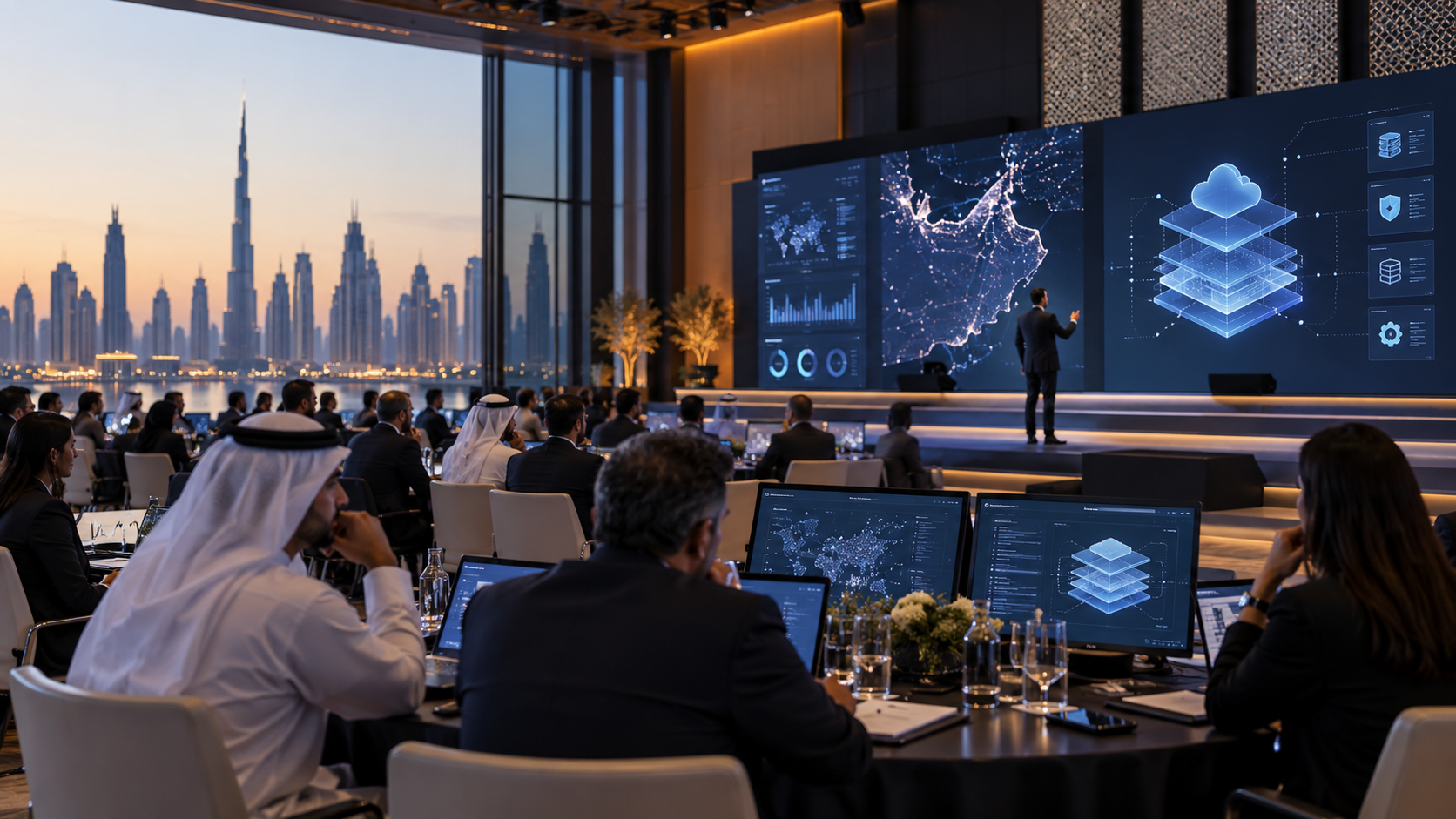
The Economic Times Annual Tech Summit – Middle East 2026 opened in Dubai on 30 September, bringing together CIOs, CTOs, CISOs, chief data officers and leaders responsible for artificial intelligence and cloud across the Gulf. The summit’s central question is whether enterprises are prepared to move from AI ambition and experimentation to reliable deployment at scale.
The agenda reflects a maturing regional debate. Early AI coverage often centred on model announcements, investment totals and adoption rankings. Enterprise leaders are now confronting less visible constraints: data quality, identity and permissions, cybersecurity, procurement, workforce capability, evaluation and the cost of operating systems once pilots become permanent services.
The event is also using the Gulf’s technology transformation as a case study in execution. The UAE and Saudi Arabia have committed significant capital to AI infrastructure and public-sector adoption, but investment alone does not guarantee productivity or safe use. Organisations need clear owners for AI systems, defined processes for human review and evidence that a system improves a measurable outcome.
The summit’s reporting cites Microsoft data placing UAE generative-AI usage among the highest globally and identifies strong recent growth in Saudi Arabia. Those figures should be treated carefully because usage, adoption and production impact are different measures. A person using a generative tool is not the same as an organisation integrating an AI system into a controlled workflow.
The most useful outcome from the summit will be practical evidence: named enterprise deployments, governance frameworks, data-readiness programmes, security controls and measured operational benefits. Event discussions by themselves do not establish those outcomes.
The summit is still editorially relevant because it shows the centre of gravity moving from ‘who has access to AI?’ to ‘who can operate it responsibly and repeatedly?’ For the GCC, that is the question that will determine whether the region’s infrastructure and investment strategy becomes durable economic capability.