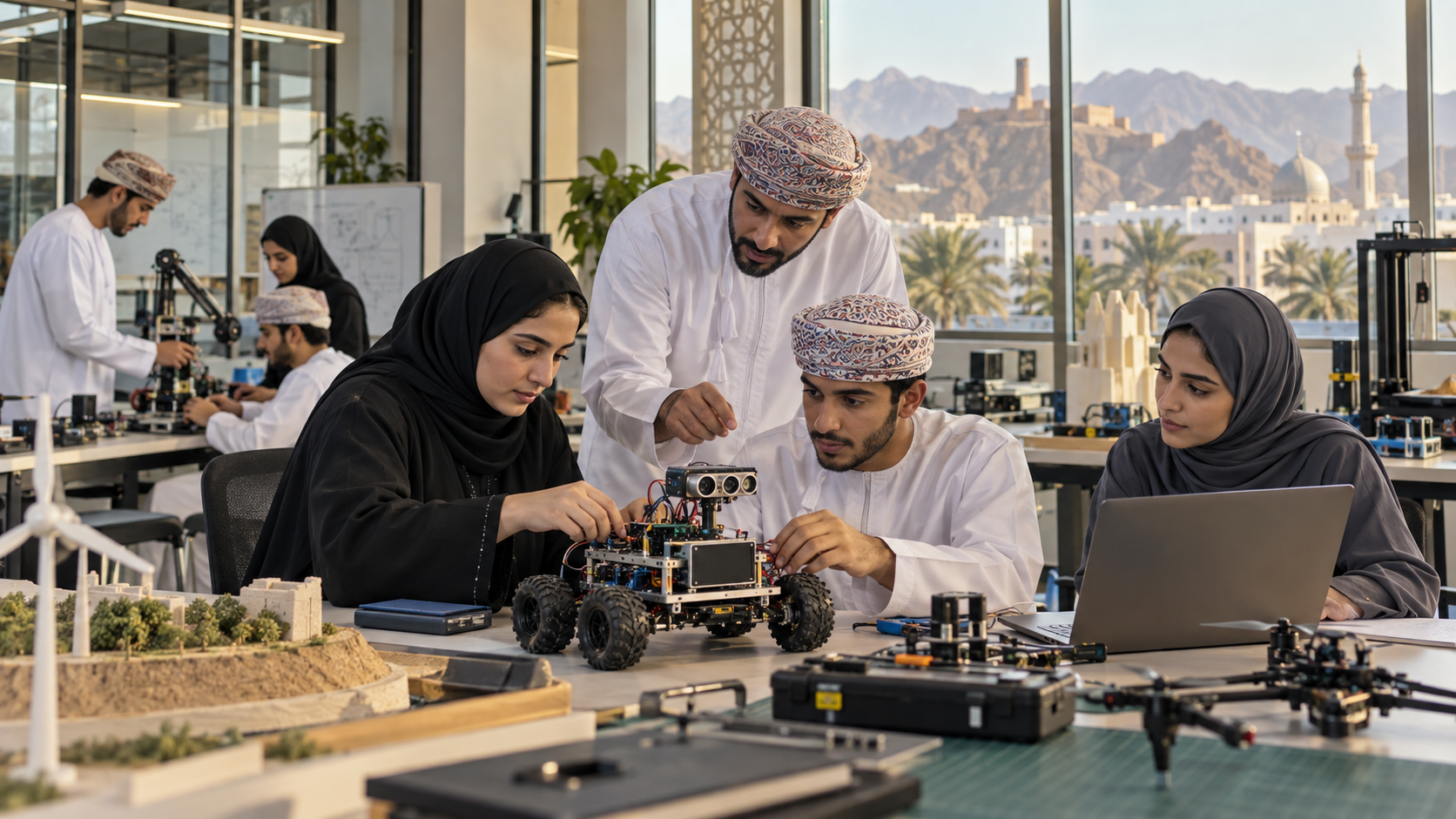
Microsoft has opened its Digital Innovation Center in Kuwait, establishing a place where public institutions and local technology teams can explore AI applications and develop practical skills. Announced on 15 November, the centre was created with the Kuwaiti government and supports the country's New Kuwait Vision 2035 development programme.
The company says the centre will bring together government bodies, customers, startups, developers and students. Its activities are expected to include workshops, demonstrations, open-house sessions and programmes for students. Participants will be able to examine Microsoft technologies across artificial intelligence, cloud computing and cybersecurity, with an emphasis on connecting tools to problems faced by organisations.
Microsoft presents the initiative as support for the transition from AI experiments to wider institutional use. The announcement places national skills development alongside access to technology: government employees and citizens are among the intended beneficiaries, as well as people building products and businesses. Neither the announcement nor the accompanying reporting provides a centre-specific investment figure, floor area or detailed timetable for individual programmes.
The opening is distinct from the previously announced plan for an Azure cloud region in Kuwait. An innovation centre provides engagement, demonstration and learning facilities; its inauguration does not establish that a separate cloud region is operational. Keeping those developments separate matters when assessing the country's actual computing capacity and the services available to institutions today.
For prospective users, the useful next information will be the programme calendar, participation conditions and the support available after an initial demonstration. A workshop can introduce a capability, but organisations still need staff who can select an appropriate problem, prepare information, test outputs and maintain the resulting service. Those steps determine whether interest turns into a dependable operational tool.
The centre gives Kuwait another route for building that experience. Its contribution will become clearer as participating institutions identify projects and report what they have learned. Measures such as completed prototypes, staff proficiency and sustained use would offer stronger evidence of impact than attendance alone. The opening establishes the venue and stated purpose; results from its activities remain to be demonstrated.