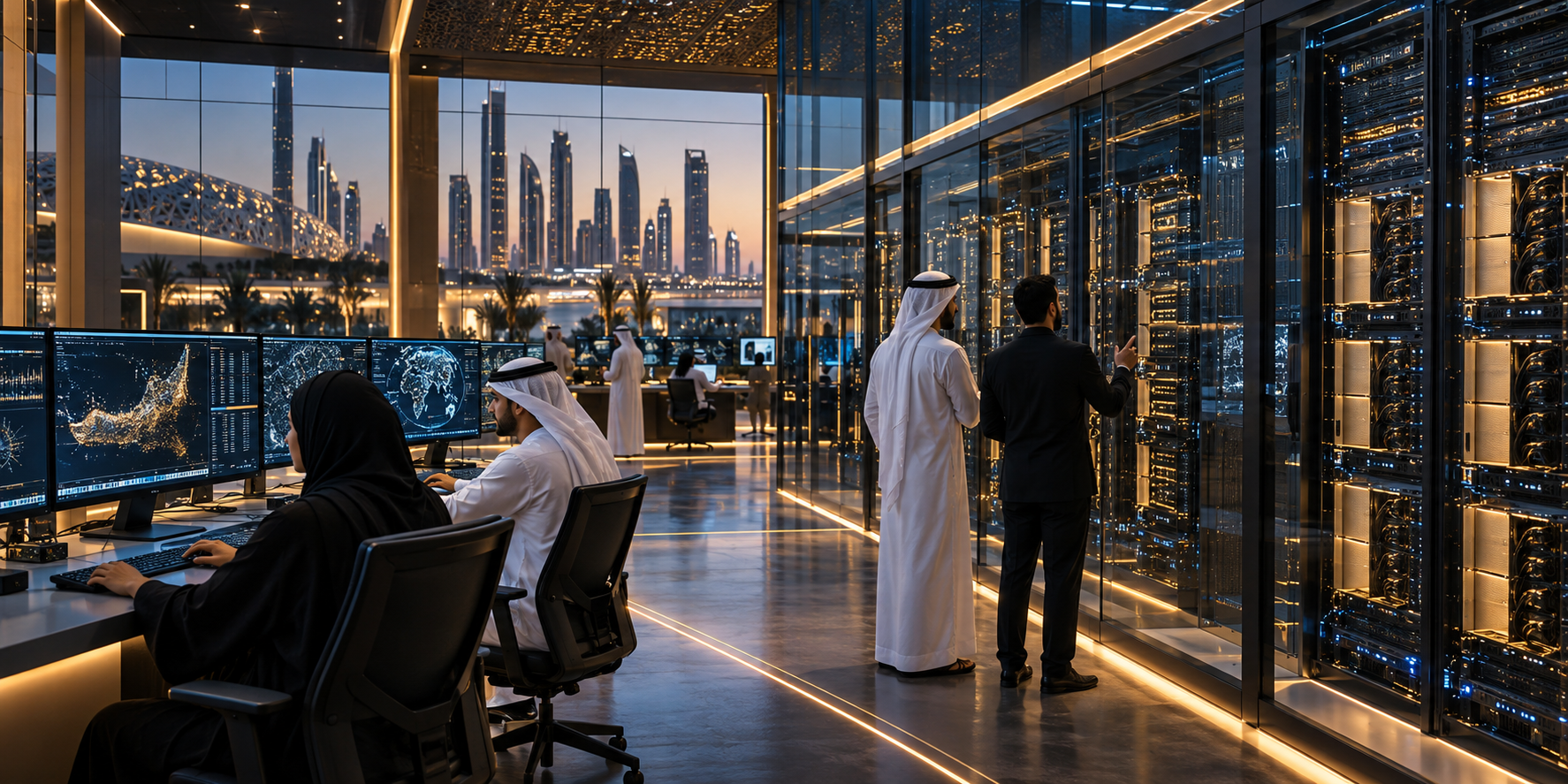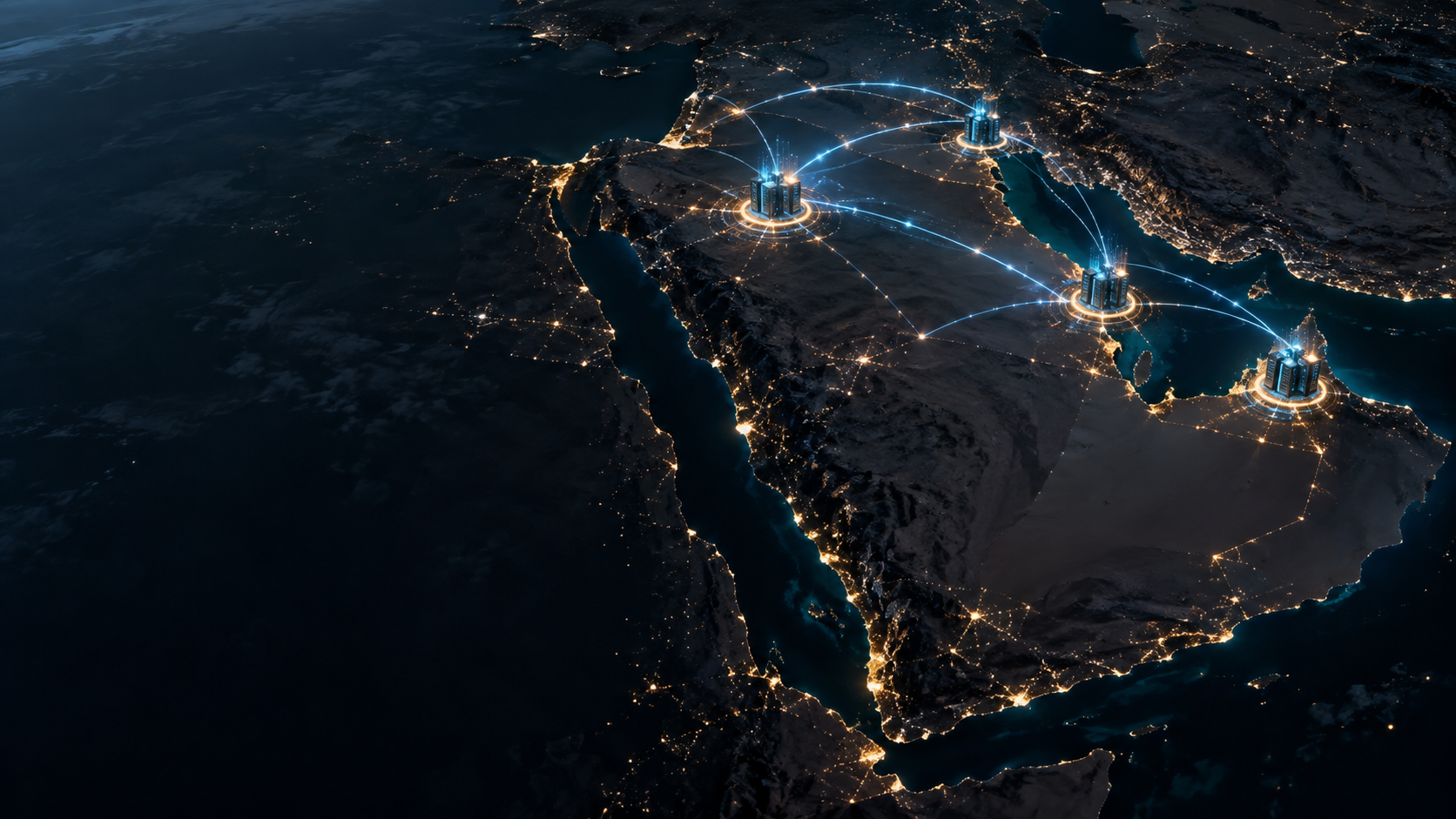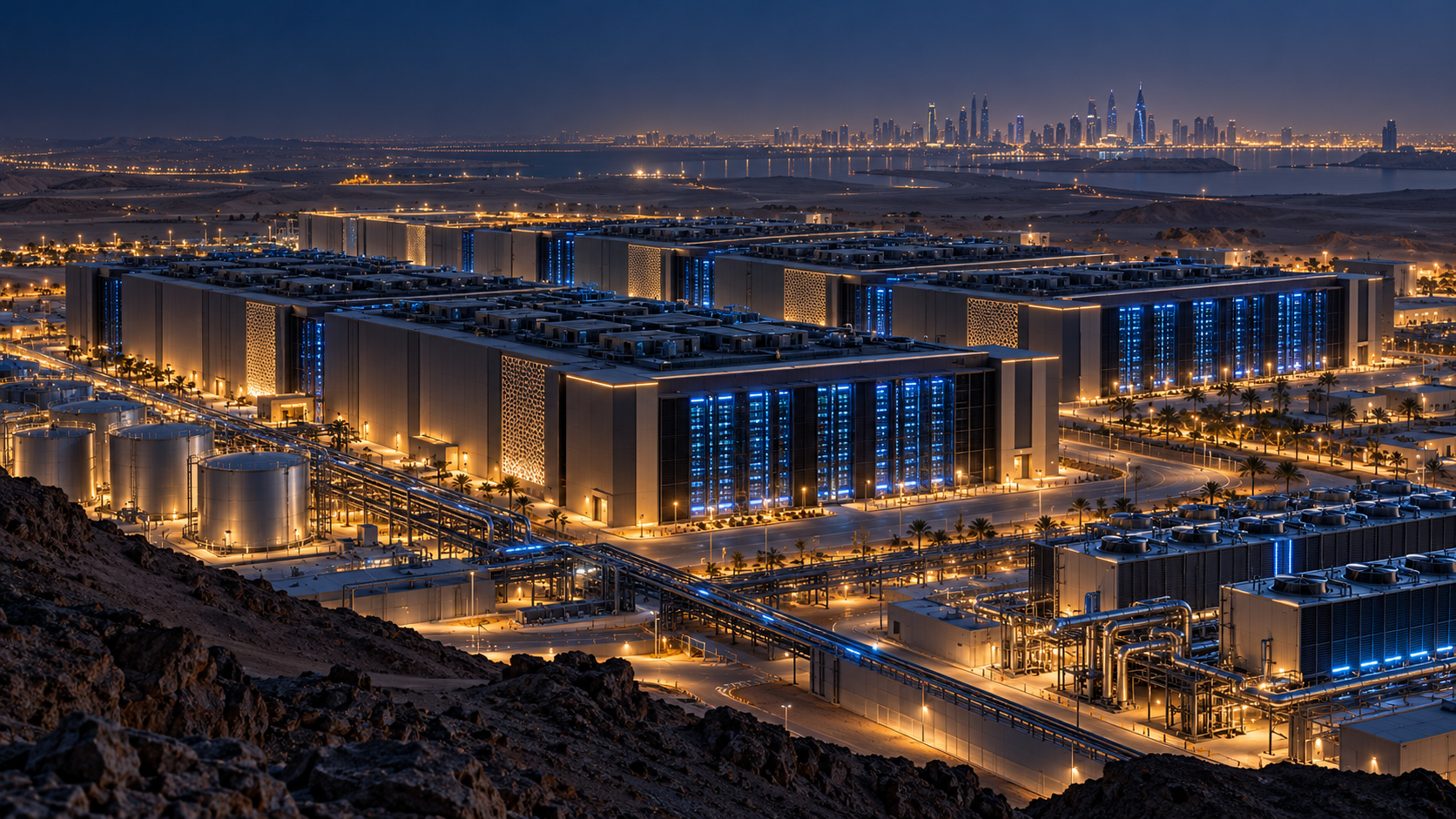
Data-centre capacity across the Gulf Cooperation Council is expected to grow sharply as artificial intelligence increases demand for high-density computing. S&P Global projects that capacity in the GCC could roughly triple to more than 3 gigawatts over the next five years. The UAE and Saudi Arabia are expected to account for more than 80 percent of the new capacity, according to the analysis reported by Gulf Times.
The projection reflects a shift in the infrastructure required to run modern AI workloads. Training and inference for large models require substantial electricity, advanced cooling, resilient connectivity and facilities able to support dense accelerator deployments. Those requirements make the location, cost and reliability of power a strategic issue alongside access to chips and cloud platforms.
The GCC has several advantages in this competition, including available land, investment capacity, expanding renewable-energy plans and governments that have identified digital infrastructure as a national priority. The same advantages do not remove the practical constraints. Operators must secure grid connections, manage water and cooling requirements, build reliable fibre routes and demonstrate that facilities can meet data-sovereignty and security expectations for public and regulated workloads.
Qatar provides one example of the scale of individual transactions. Gulf Times reported that MEEZA has agreed an eight-megawatt lease worth more than QR1 billion with an unnamed hyperscaler. The report is evidence of investment activity, but it does not identify the customer or establish that every new facility will be dedicated to AI. That distinction matters in a market where conventional cloud, enterprise applications and AI workloads may share the same infrastructure.
The expected expansion will benefit data-centre developers, utilities, cooling specialists, connectivity providers and firms that can help customers optimise the cost of AI inference. It will also make energy efficiency and utilisation important measures of competitiveness. A large announced capacity figure is not the same as available compute: delivery timelines, energisation, hardware availability and customer demand determine how much capacity becomes operational. The S&P Global projection nevertheless signals that the Gulf’s AI race is becoming an infrastructure story, with regional scale increasingly measured in power, facilities and dependable compute.