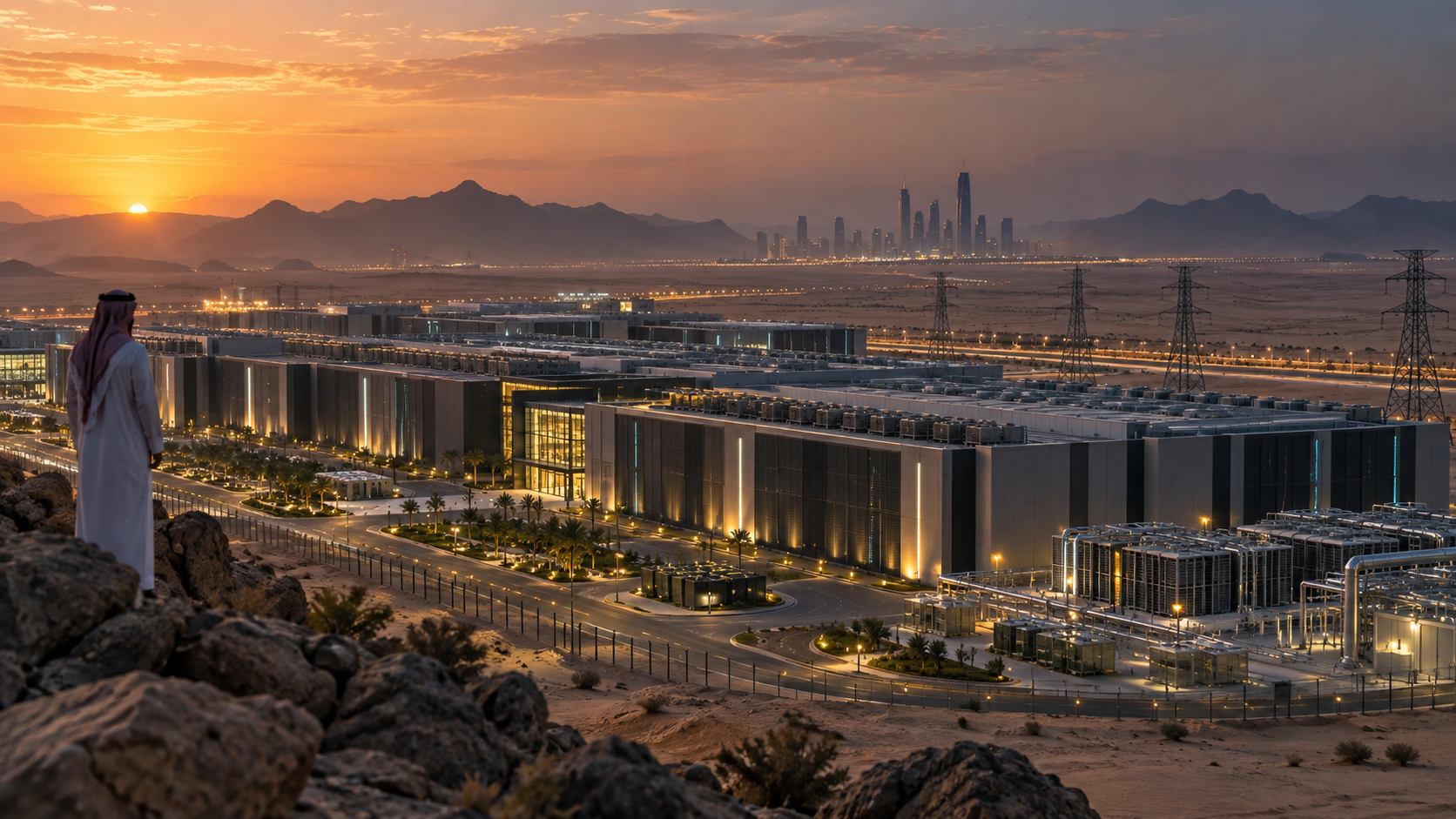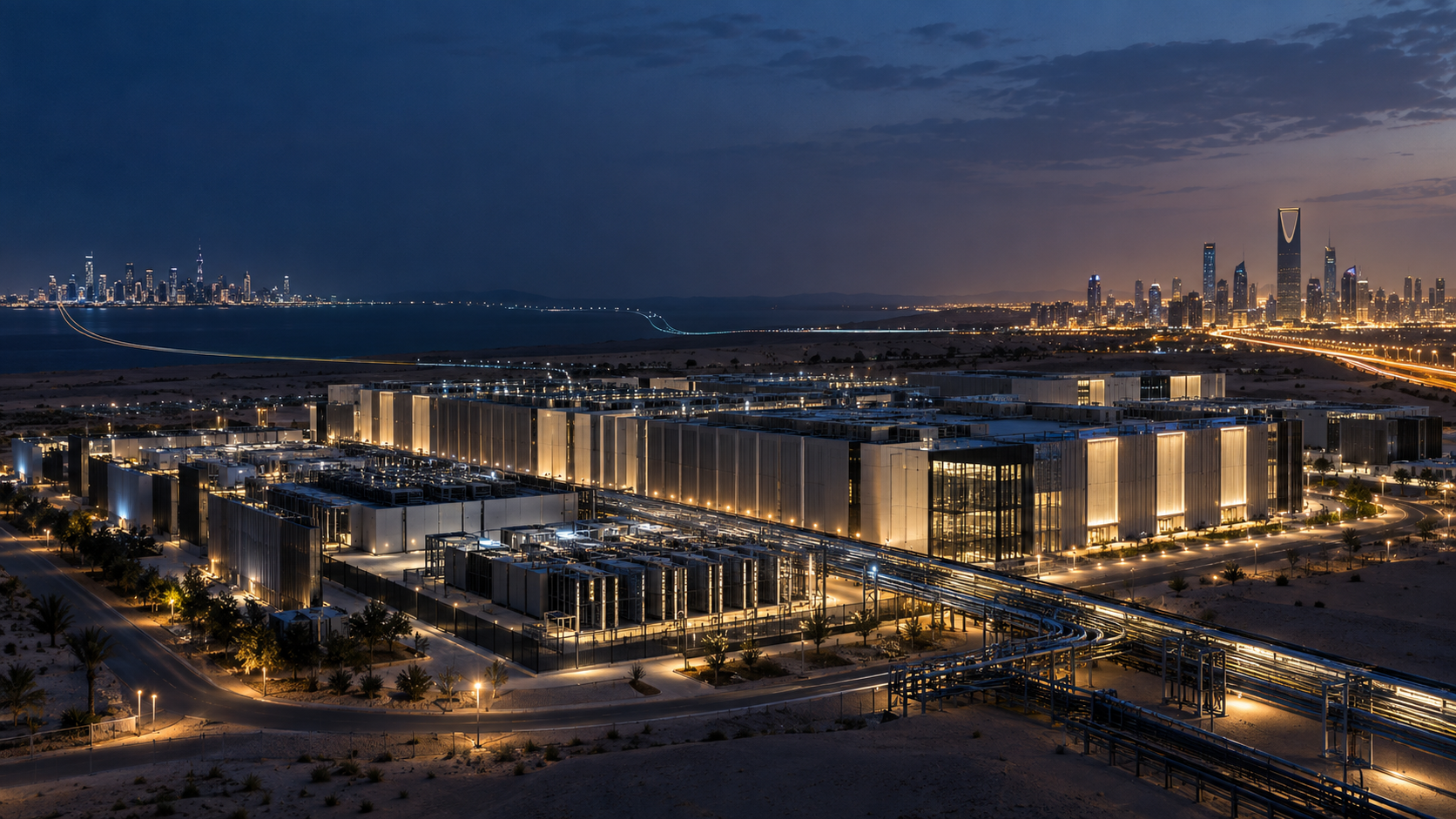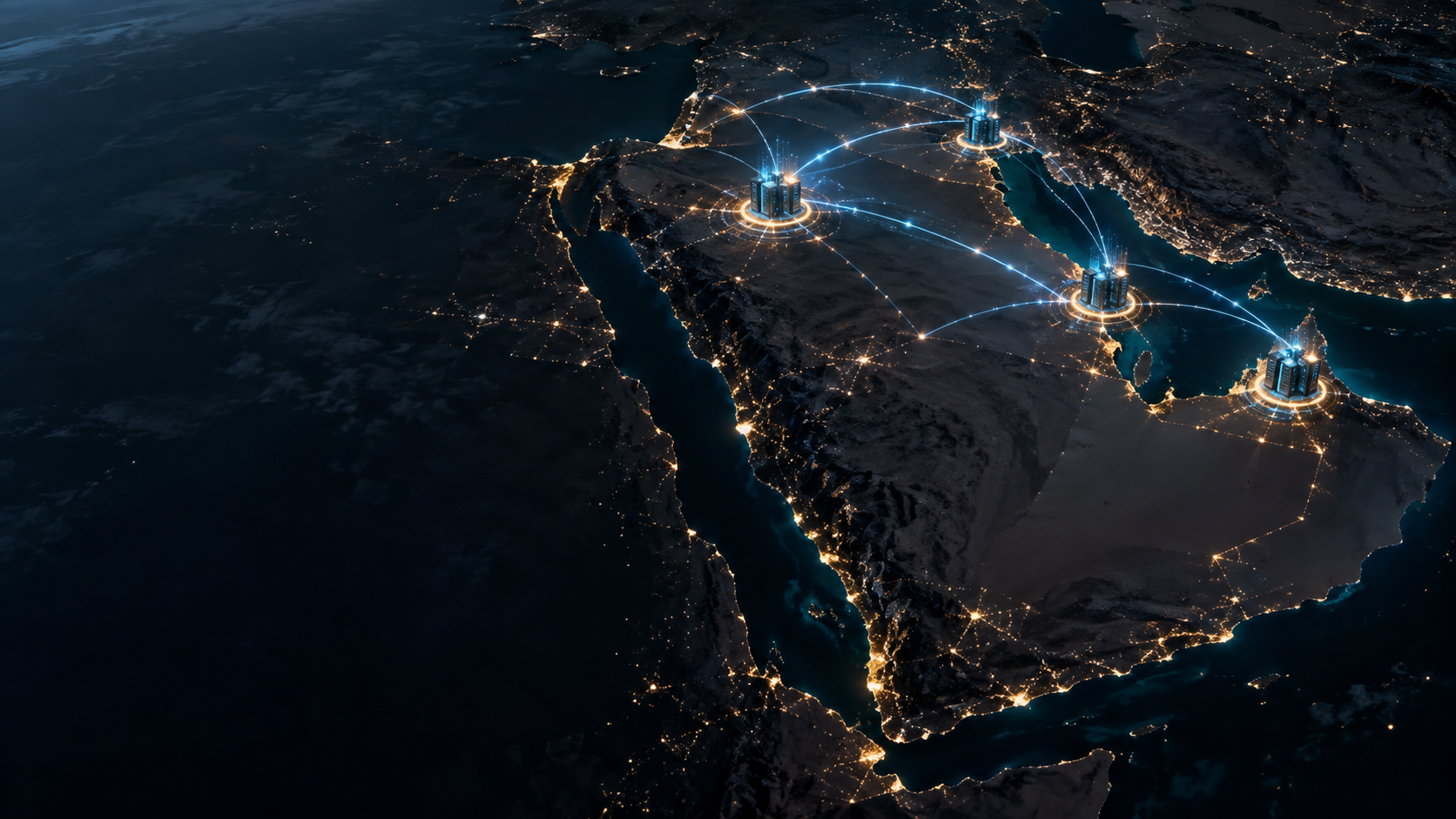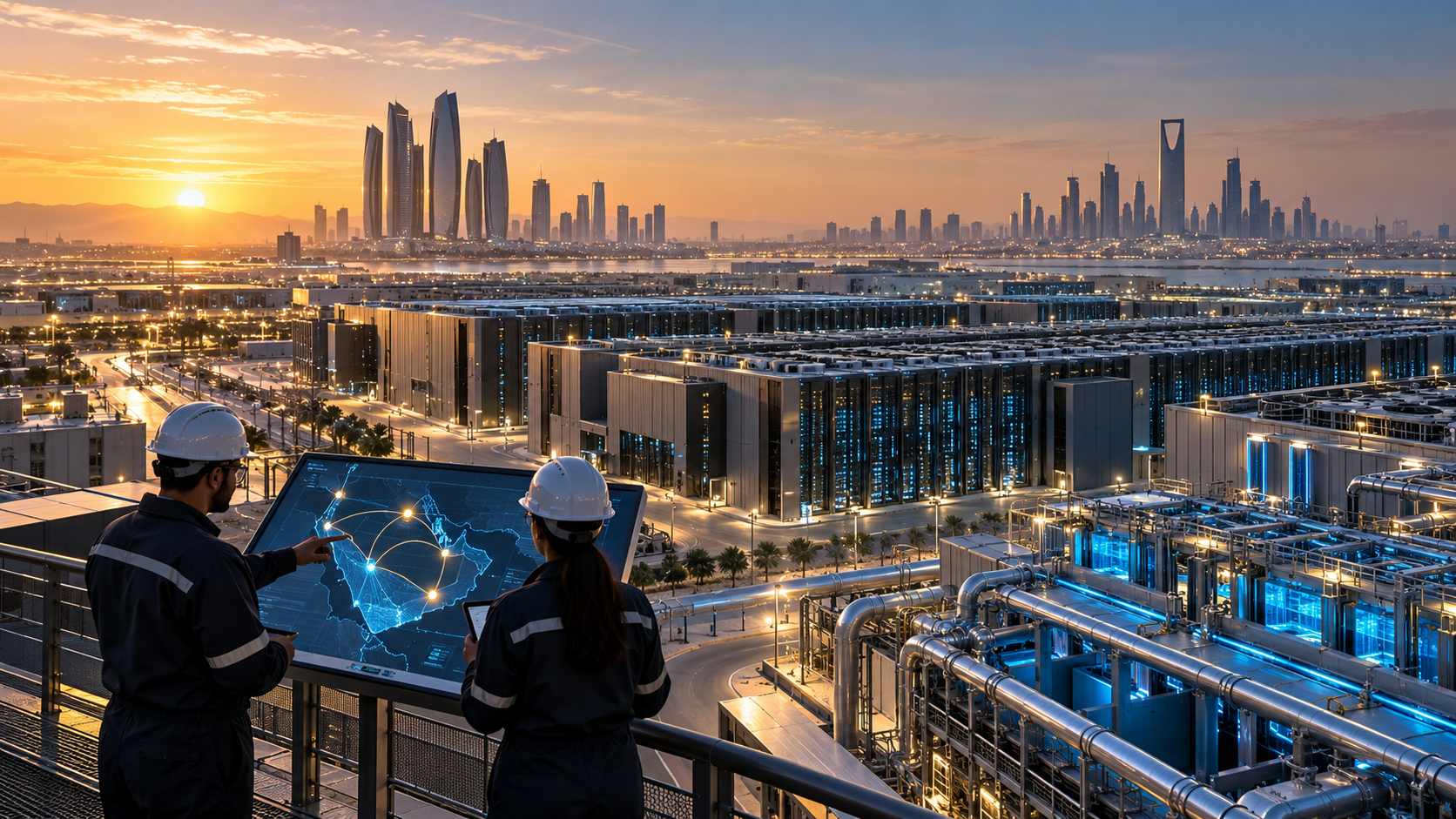
The United Arab Emirates and Saudi Arabia are expected to drive most of the Middle East’s data-centre expansion through 2030, according to a report from S&P Global cited by Reuters. The rating agency expects the two markets to add approximately 2 to 3 gigawatts of IT power over the period and account for more than 80 percent of the region’s share of new capacity.
The forecast reflects the physical requirements of artificial intelligence. Training and inference workloads need dense accelerator clusters, reliable power, advanced cooling, high-capacity networks and facilities that can meet data-residency and security requirements. The UAE and Saudi Arabia combine sovereign capital, energy availability, government support and large technology programmes, giving them a stronger position than smaller markets to finance and absorb this infrastructure.
Saudi Arabia’s HUMAIN-linked data-centre projects could reach up to 1.9GW by 2030, with a larger pipeline beyond that date. The UAE is also developing major AI-campus capacity, including the Stargate UAE project. These are announced or planned capacities, not equivalent to operational compute already available to customers. The key market questions are financing, construction, power connection, accelerator supply, utilisation and the timing of customer workloads.
S&P’s figures also underline the difference between capital commitments and productive capacity. A data centre becomes strategically valuable only when it is commissioned, connected, efficiently cooled, populated with hardware and used by customers or public institutions. Empty megawatts do not create AI capability on their own. Investors and policymakers will need to track delivery milestones, operating costs and the share of capacity dedicated to domestic or export workloads.
The market is likely to develop in layers. Hyperscalers and sovereign AI companies will anchor large campuses, telecom operators will provide connectivity and local cloud access, and construction and engineering firms will deliver the physical systems. Smaller GCC states may still play important roles in specialised hosting, regional redundancy, energy and sector-specific applications even if the UAE and Saudi Arabia dominate scale.
For GCC AI Network, this is a major market-structure story. The next phase of the Gulf AI race will be judged less by headline gigawatts than by how quickly announced capacity becomes secure, affordable and usable compute for enterprises, researchers and governments.