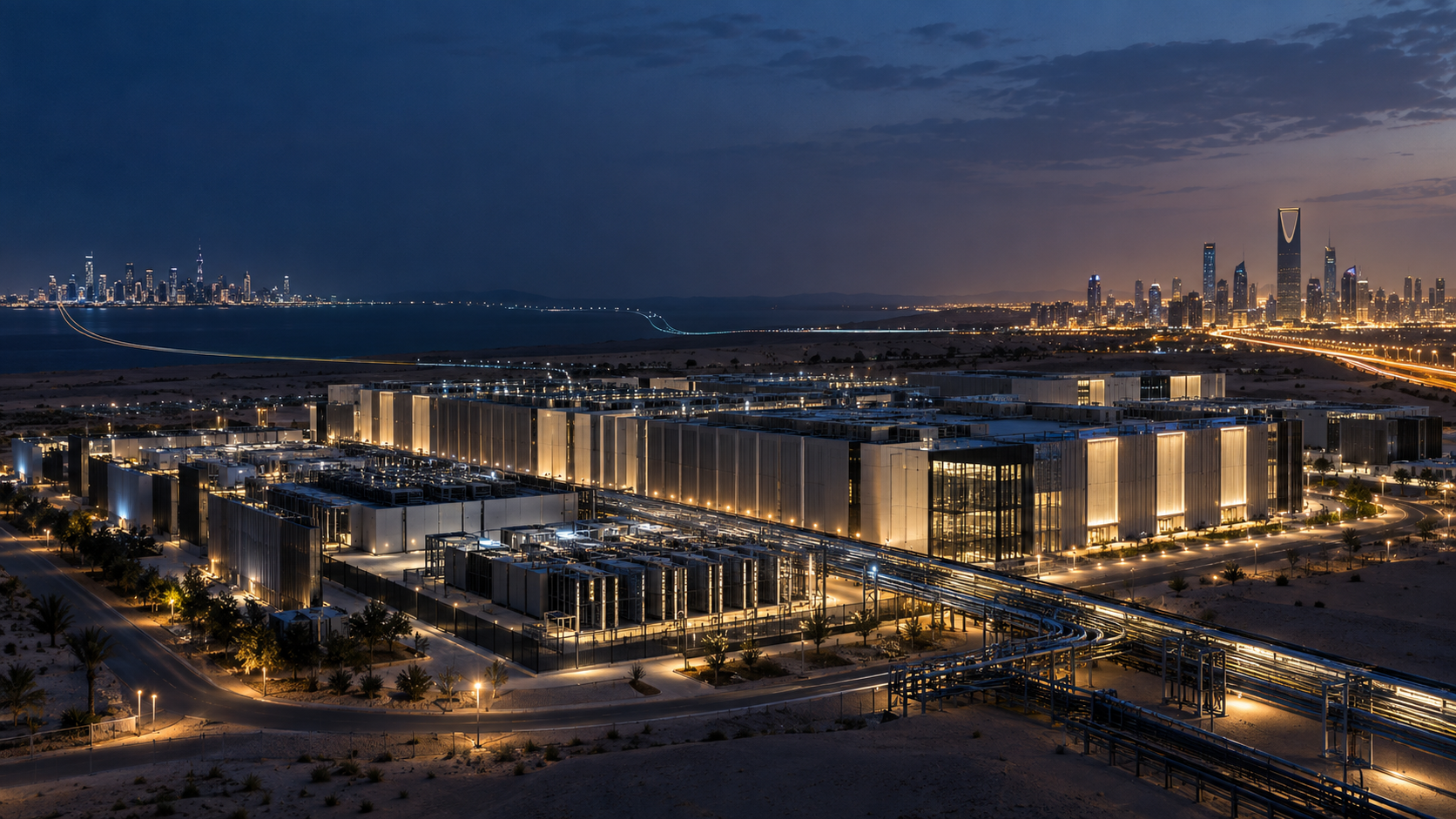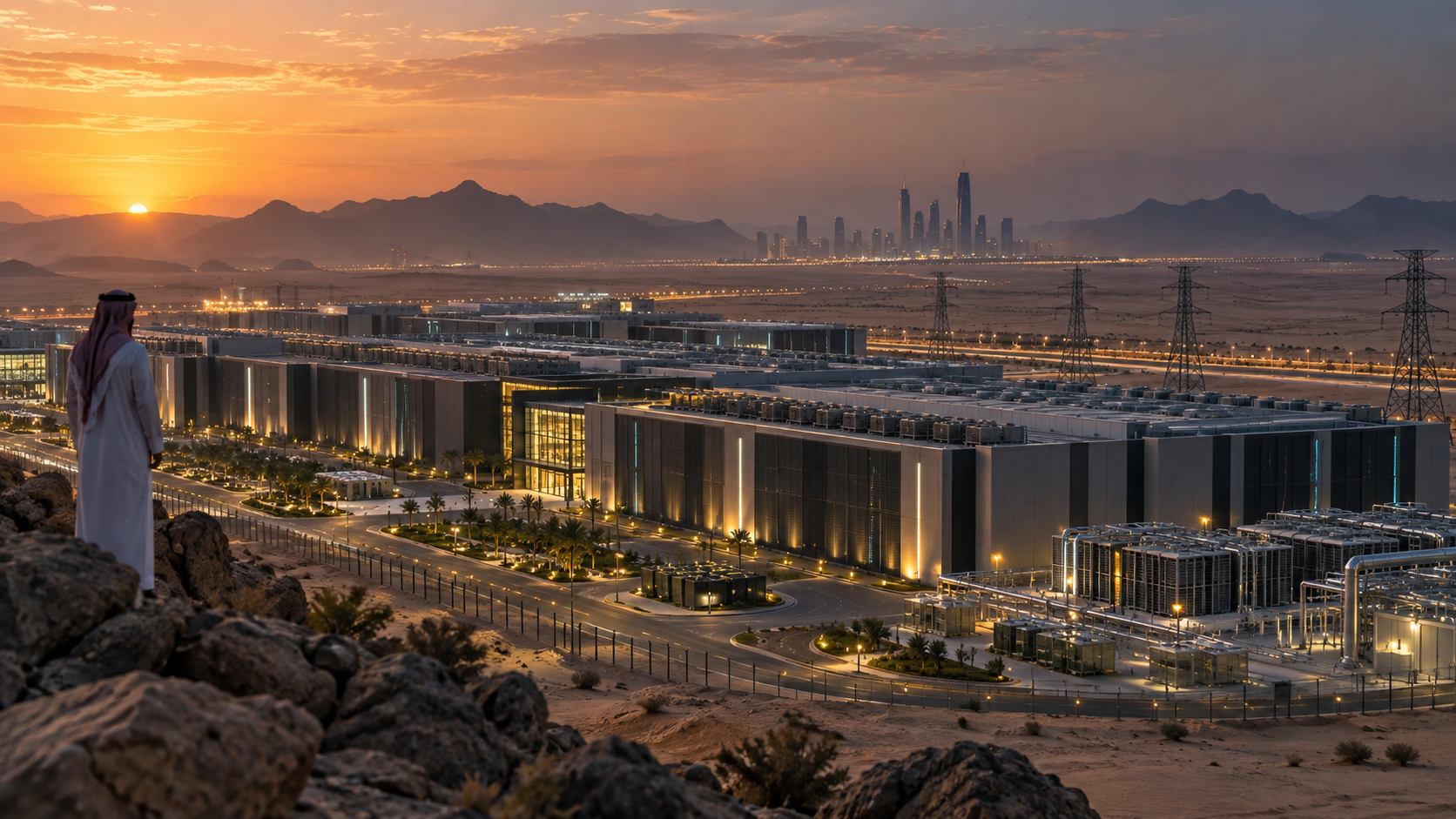
Saudi Arabia’s HUMAIN and the National Infrastructure Fund have agreed a financing framework worth up to $1.2 billion to expand artificial intelligence and digital infrastructure in the Kingdom. The agreement was announced on 22 January 2026 on the sidelines of the World Economic Forum in Davos.
According to the reported terms, the framework could support as much as 250 megawatts of AI data-centre capacity for HUMAIN’s local, regional and global customers. The two organisations also agreed to explore an AI data-centre investment platform that could bring local and international institutional capital into future projects.
The announcement is significant because it links Saudi AI ambitions to a dedicated infrastructure-finance mechanism. Model development and enterprise deployment require access to large amounts of reliable compute, but that compute depends on land, power, cooling, connectivity, construction, financing and long-term customers. A financing framework addresses one part of that chain while leaving the final commercial and operational details to be completed.
It also shows how Saudi AI policy is moving beyond model announcements toward the financing and physical systems needed to operate those models. The economics of compute will depend on utilisation, energy efficiency, hardware availability and the ability to secure customers for capacity over multiple years.
The agreement builds on other HUMAIN infrastructure plans, including work with stc and its data-centre subsidiary center3. It places HUMAIN at the centre of a Saudi strategy that aims to develop data centres, cloud capabilities, models and AI applications inside an integrated national ecosystem.
The framework is non-binding, so it should not be described as a completed $1.2 billion investment or as proof that 250MW is already operational. Its importance is directional and financial: it establishes a route through which Saudi Arabia can mobilise infrastructure capital around AI compute. The next evidence to watch is final financing, site selection, construction milestones, customer commitments and the amount of capacity that reaches production service.