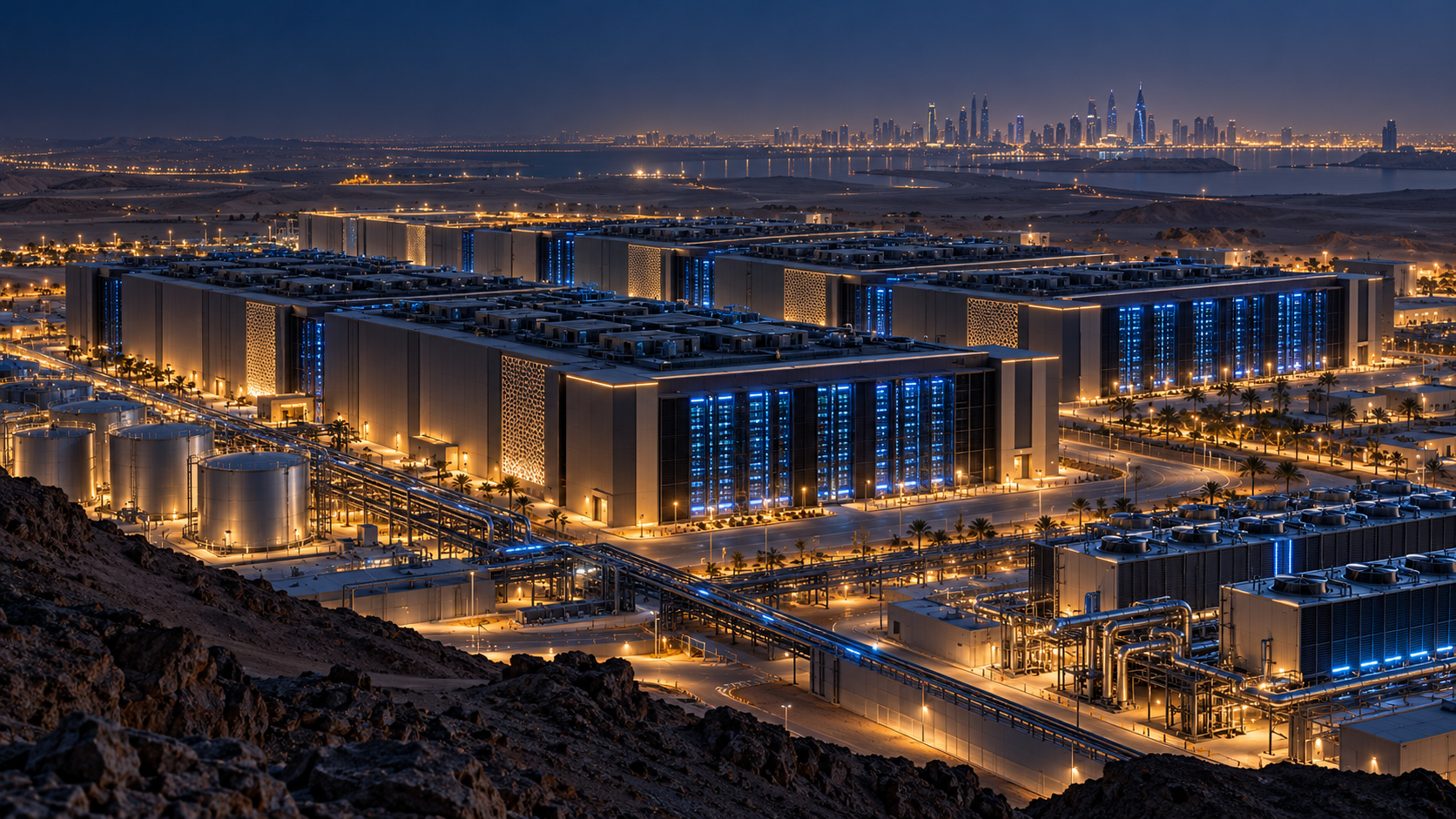
Oman and UK-founded infrastructure investment company Yamna have agreed to develop a proposed artificial intelligence data centre in Salalah. The agreement, reported on 24 October, is expected to support a first phase valued at more than £1 billion and was signed by Yamna and Oman’s Ministry of Transport, Communications and Information Technology.
The project would add large-scale AI and hyperscale data-centre infrastructure to Salalah Al Khadra Digital. Oman has positioned Salalah as a connectivity location because of its coastal setting and access to international submarine cable routes. A large AI facility could build on that connectivity while creating demand for power, cooling, fibre, engineering, cloud services and specialist operations.
The public information remains limited. The announcement does not disclose a megawatt capacity, a final financing structure, the identity of anchor customers, the technology supplier or a detailed construction schedule. It therefore describes a major infrastructure plan rather than an operational data centre. The distinction is important because the ultimate economic and AI impact will depend on whether the project reaches financial close, secures sufficient power and network capacity, and attracts customers able to use the facility.
For Oman, the proposal fits a broader effort to diversify the digital economy and make better use of the country’s geography and international connectivity. Salalah could serve domestic enterprises, international cloud and AI companies, or both, but the available reporting does not yet establish the intended customer mix. Data-centre development also creates environmental and resilience questions, including cooling requirements, water management, energy sourcing, physical security and continuity during extreme weather.
The project is relevant to the GCC because most of the region’s largest AI-compute announcements have concentrated on the UAE and Saudi Arabia. A billion-pound proposal in Oman would broaden the geography of Gulf AI infrastructure and create another potential route for serving workloads between Asia, Africa and the Middle East. It could also encourage competition among Gulf states for power, connectivity and hyperscale investment.
The appropriate editorial framing is cautious: Oman has signed an agreement for a proposed large-scale AI data centre, but capacity and delivery are not yet confirmed. Follow-up reporting should track approvals, land and power commitments, financial close, named technology partners and the start of construction. Only after those milestones are verified should the project be described as an active AI-compute deployment.