The Qatar Computing Research Institute (QCRI) at Hamad Bin Khalifa University has published a comprehensive technical report on Fanar 2.0, presenting empirical evaluation data and architectural frameworks for training sovereign Arabic multimodal foundation models. Released following peer review and public dissemination on ArXiv, the report provides an unprecedented look into the engineering constraints of building high-performance non-English models under conditions of extreme web data scarcity.
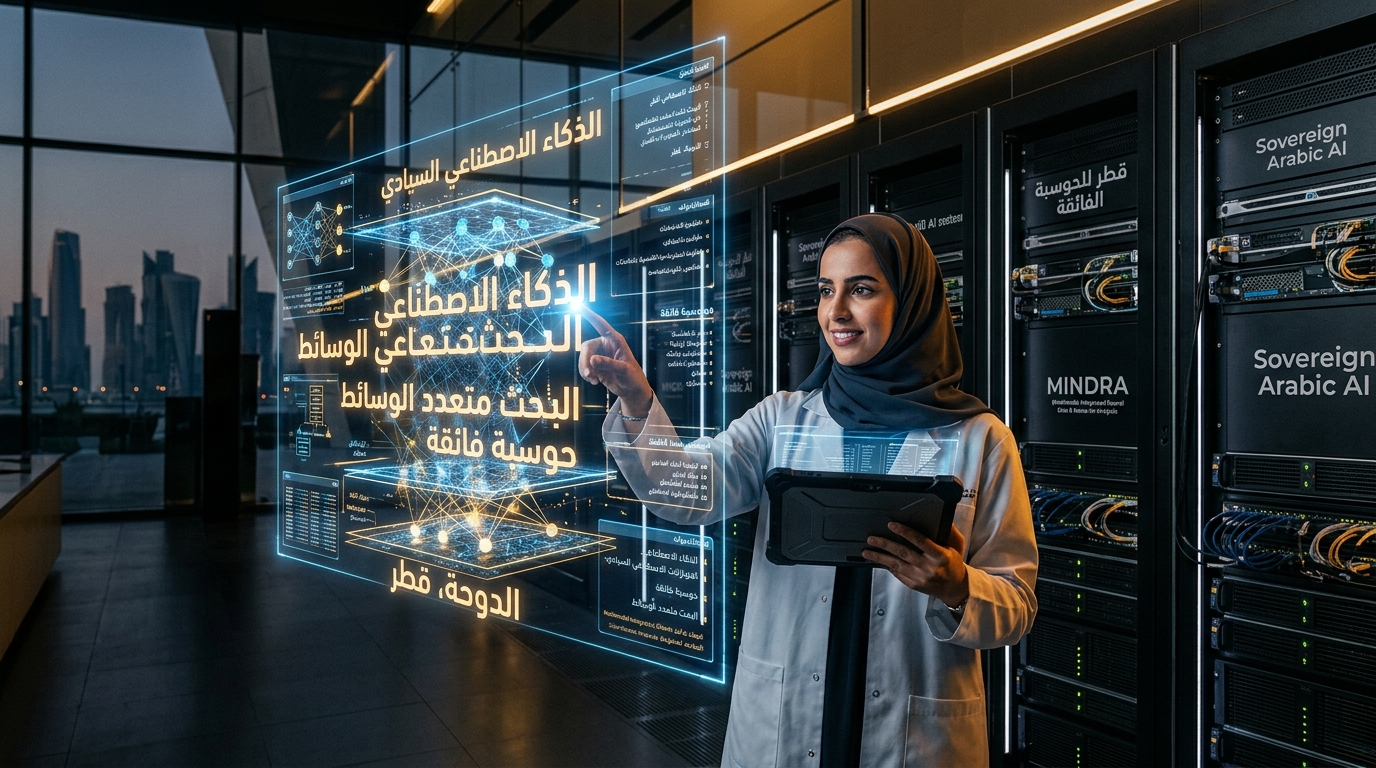
While the Arabic language is spoken by more than 400 million people globally, native Arabic content accounts for less than 0.5 percent of crawled web text, creating severe synthetic quality barriers for standard transformer pre-training. QCRI's engineering team addressed this imbalance by utilizing 256 Nvidia H100 Tensor Core GPUs situated within Qatar's sovereign computing cluster, developing proprietary synthetic data curation pipelines and morphological tokenizers that achieved competitive benchmark scores with eight times fewer pre-training tokens than required by Fanar 1.0. This efficiency breakthrough demonstrates that targeted data engineering can overcome sheer volume deficits in non-English model training.
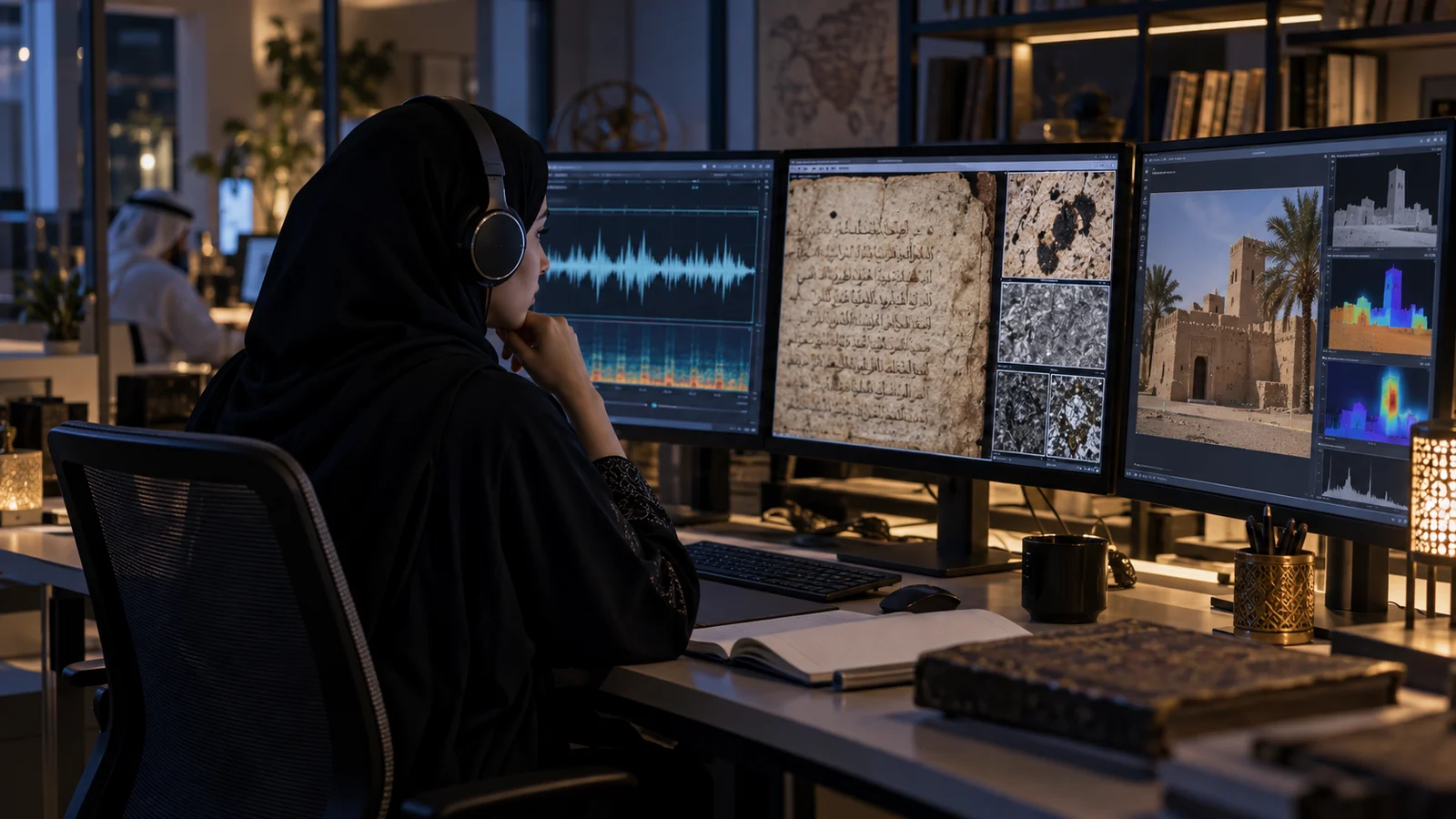
The technical architecture spans beyond basic conversational text, incorporating unified multimodal encoders for dialectal speech recognition, cultural document comprehension, and structured reasoning across Classical Arabic and regional Gulf vernaculars. The publication explicitly details safety alignment mechanisms designed to reflect regional cultural norms without degrading general scientific and mathematical reasoning capability. By making its benchmarks, architectural choices, training parameters, and error distributions transparently available to outside scrutinizers, QCRI offers a verifiable alternative to proprietary black-box commercial models deployed across the Arabian Peninsula.
The broader significance of the Fanar 2.0 report lies in demonstrating that technological sovereignty in the AI era does not require matching the hundreds of billions of dollars spent by American hyperscalers. Instead, targeted high-efficiency architectures, sovereign compute discipline, and localized linguistic curation can produce competitive frontier capabilities tailored to national priorities. For Qatar and the wider GCC research ecosystem, Fanar 2.0 validates that regional universities can drive fundamental technological innovation while establishing rigorous, reproducible benchmarks for sovereign Arabic model evaluation.