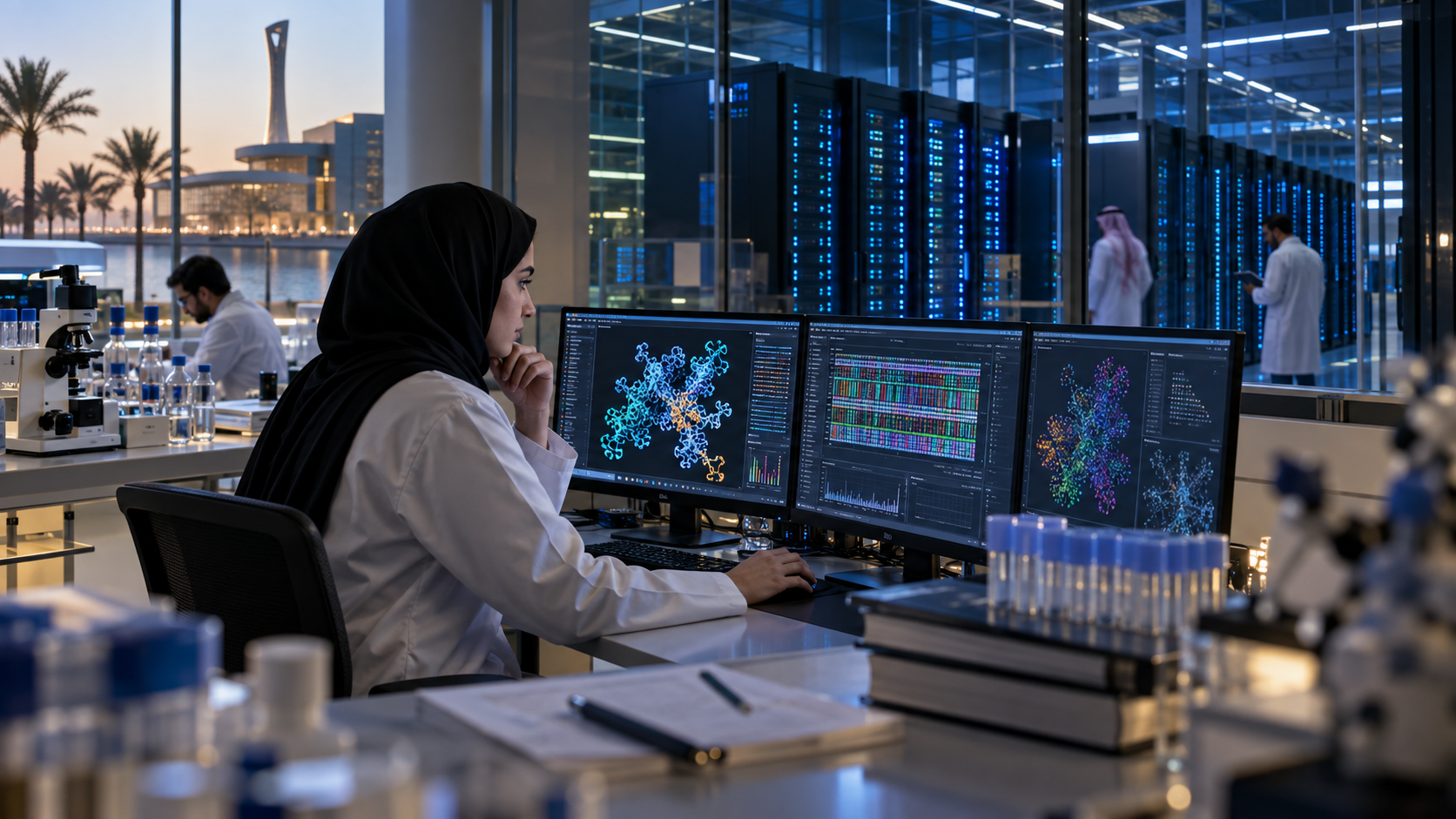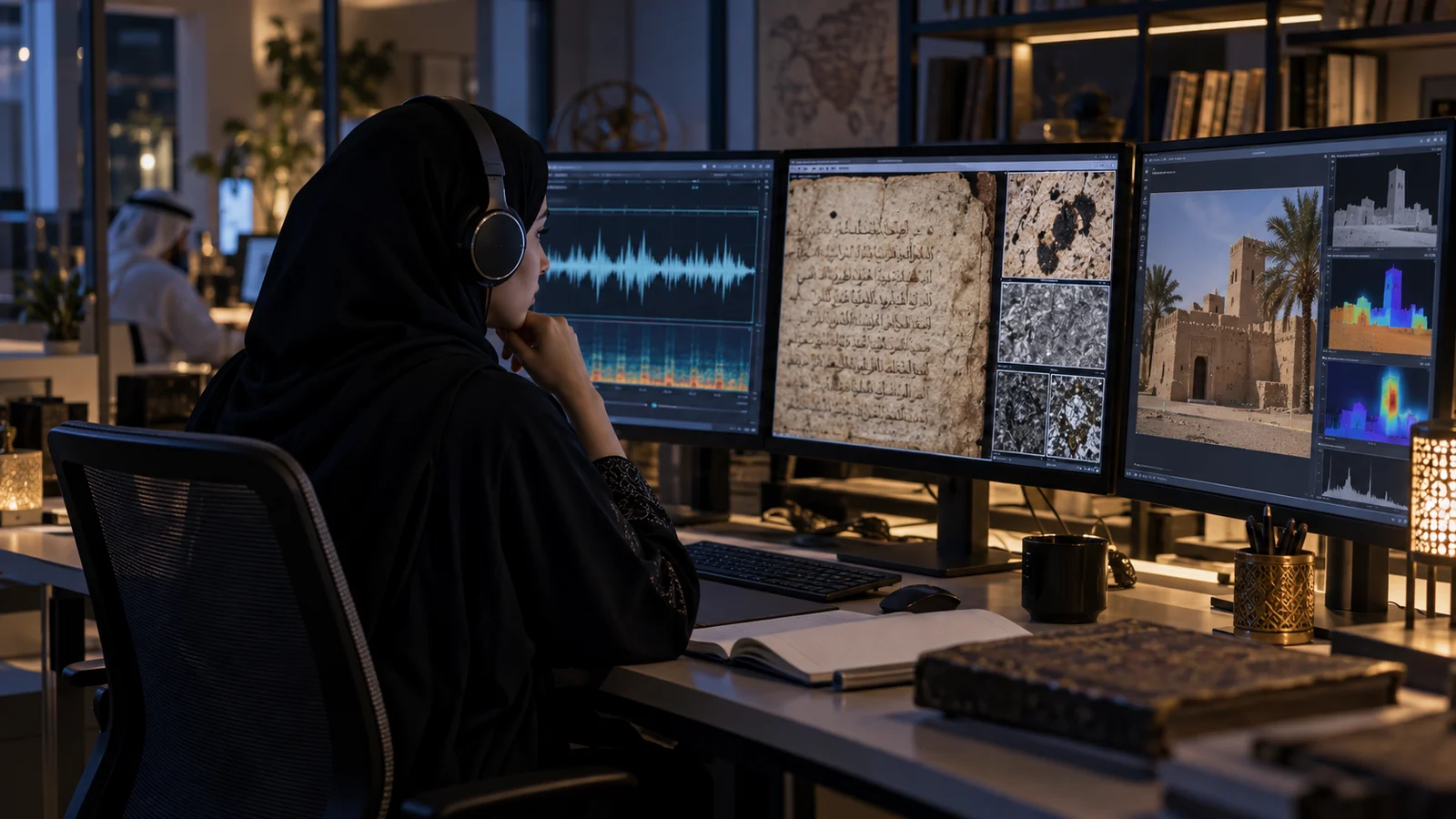
Hamad Bin Khalifa University's Qatar Computing Research Institute launched Fanar 2.0 at World Summit AI Qatar in December 2025 and followed with a detailed technical paper in March 2026. The platform is designed as an Arabic-centric generative AI stack rather than a single chatbot. It brings together text models, speech capabilities, image generation and understanding, poetry generation, translation, safety tooling and grounded services intended for culturally specific domains.
The technical report makes the resource challenge unusually visible. The Fanar team says the second generation was developed on 256 Nvidia H100 GPUs while Arabic represents roughly 0.5 per cent of available web data despite having about 400 million native speakers. The researchers report using eight times fewer pre-training tokens than Fanar 1.0 while improving benchmark results across Arabic knowledge, language, dialect and English capability. Those are team-reported results, but publishing the architecture and evaluation detail gives outside researchers a clearer basis for scrutiny than a product announcement alone.
Fanar's significance lies in treating sovereignty as an engineering requirement. QCRI says the data pipelines, training and deployment infrastructure were designed and operated within the institute, while HBKU positions the platform as a way for organisations to use Arabic AI in controlled environments. The scope also recognises that Arabic performance is not one problem: formal language, dialects, speech, cultural references and specialist knowledge require different datasets and evaluations. A multimodal stack raises the evaluation burden further because safety and accuracy must be assessed across text, audio and images.
The next question is how laboratory capability translates into dependable use. Independent testing should compare Fanar 2.0 across Gulf dialects, factual tasks, code-switching, retrieval and high-consequence domains, with failure examples reported alongside aggregate scores. Adoption evidence should show who is running the models, under what controls and with what measurable outcomes. Fanar 2.0 gives the region a substantial research asset; its wider value will depend on transparent evaluation, accessible deployment pathways and continued investment in Arabic data that reflects real users rather than a single benchmark.