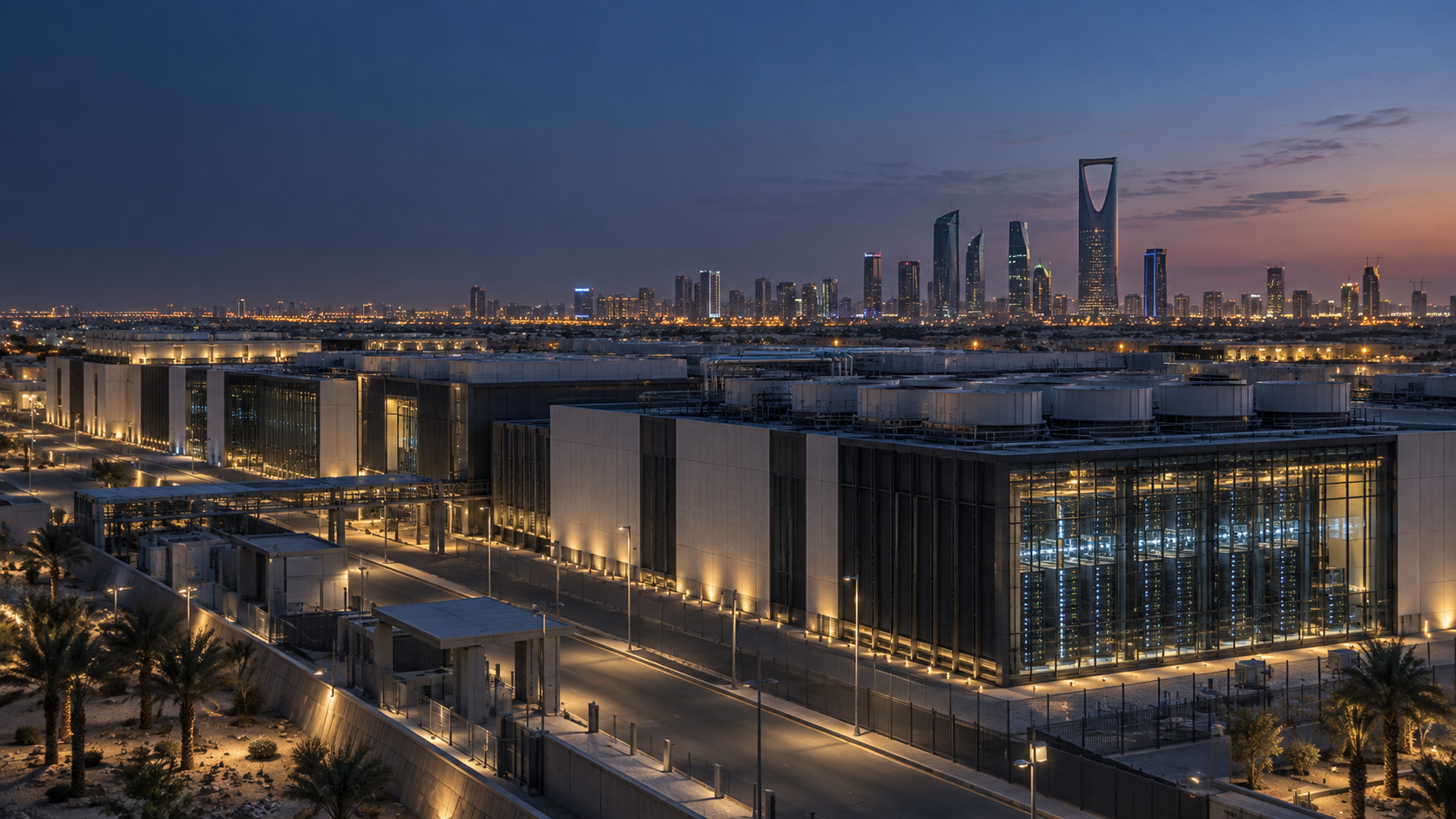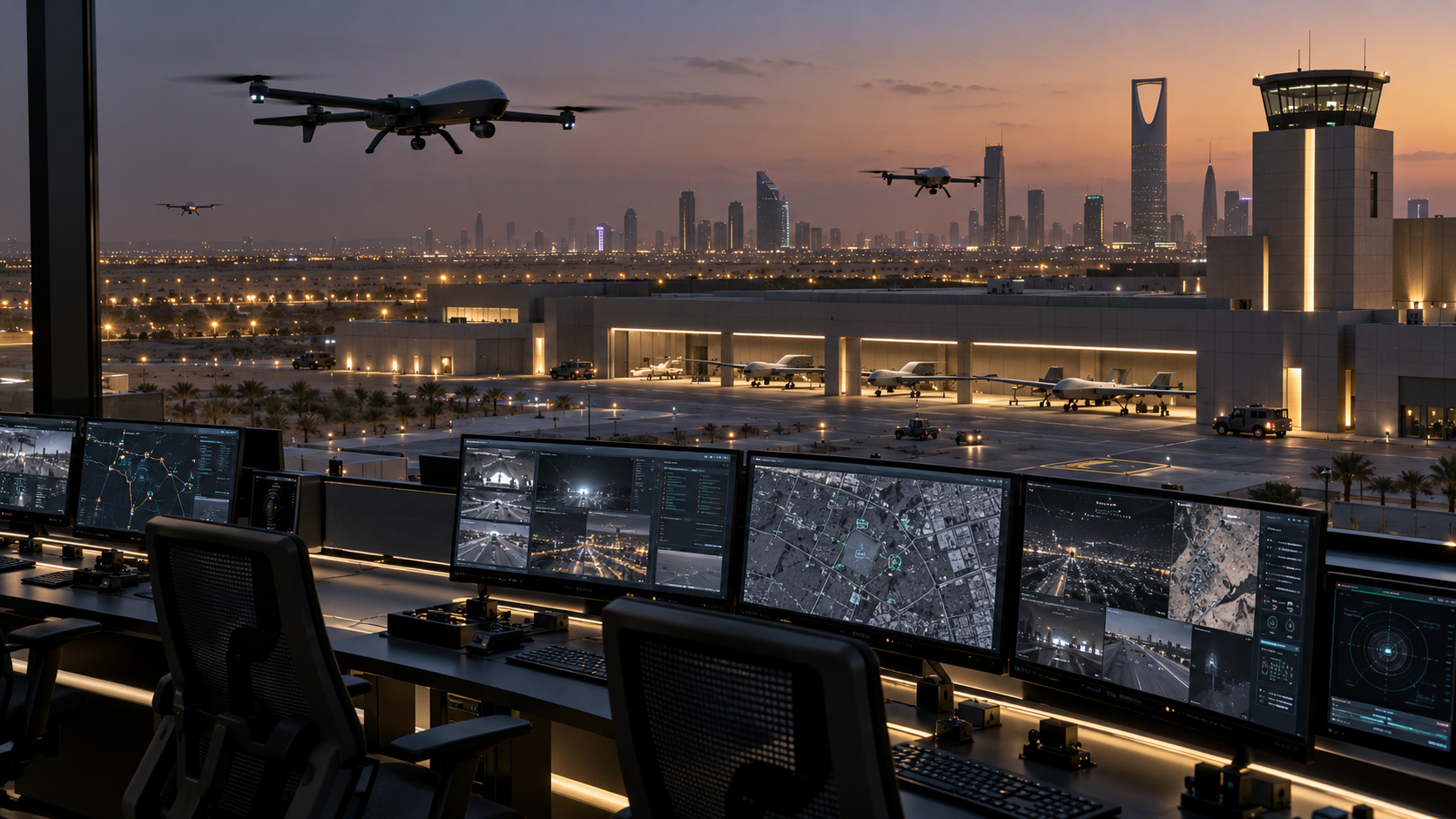
Saudi Arabia has inaugurated new command-and-control, cybersecurity and unmanned aerial vehicle systems centres as part of an expansion of digital capabilities within the Facilities Security Forces. The centres were reviewed by the Minister of Interior in Riyadh on 20 October, according to the Saudi Press Agency.
The command-and-control centre includes seven specialised units and is connected to 13 command-and-control centres at branches across the Kingdom. The integrated systems are designed to receive reports, manage and monitor field operations, and exchange security information. The stated objective is to improve response times and coordination between facilities and regional teams.
The security UAV systems centre is also part of the programme. SPA reported that the centre uses unmanned aircraft equipped with artificial intelligence technologies to support field surveillance and improve operational efficiency in the areas under the forces’ responsibility. The announcement describes an operational security capability, but it does not provide details on the specific models, autonomy limits, datasets, accuracy measures or approval procedures governing the AI components.
That distinction is important in high-consequence environments. AI-assisted surveillance can help operators review large volumes of imagery, identify patterns and prioritise attention, but the system’s value depends on human supervision, clear rules of engagement, reliable communications and robust handling of false positives. Cybersecurity is equally important because command systems, sensors and data links create a connected attack surface.
The inauguration places AI inside a broader institutional architecture rather than presenting it as a standalone software experiment. The systems are being connected to existing command structures and digital services, which makes interoperability, access control, auditability and incident response central to their safe operation. It also shows how Saudi Arabia’s national AI agenda is extending into public-security and critical-infrastructure workflows.
The announcement is evidence of a newly inaugurated capability, not proof that every security decision has been automated. The next signals to watch are deployment scale, published governance standards, independent evaluation and the extent to which operators remain accountable for decisions supported by the systems. For the Gulf AI market, the project is another indicator that demand is moving toward resilient, mission-critical platforms combining AI, secure communications, cybersecurity and human oversight.